
Niagara Wine Harvest 2026
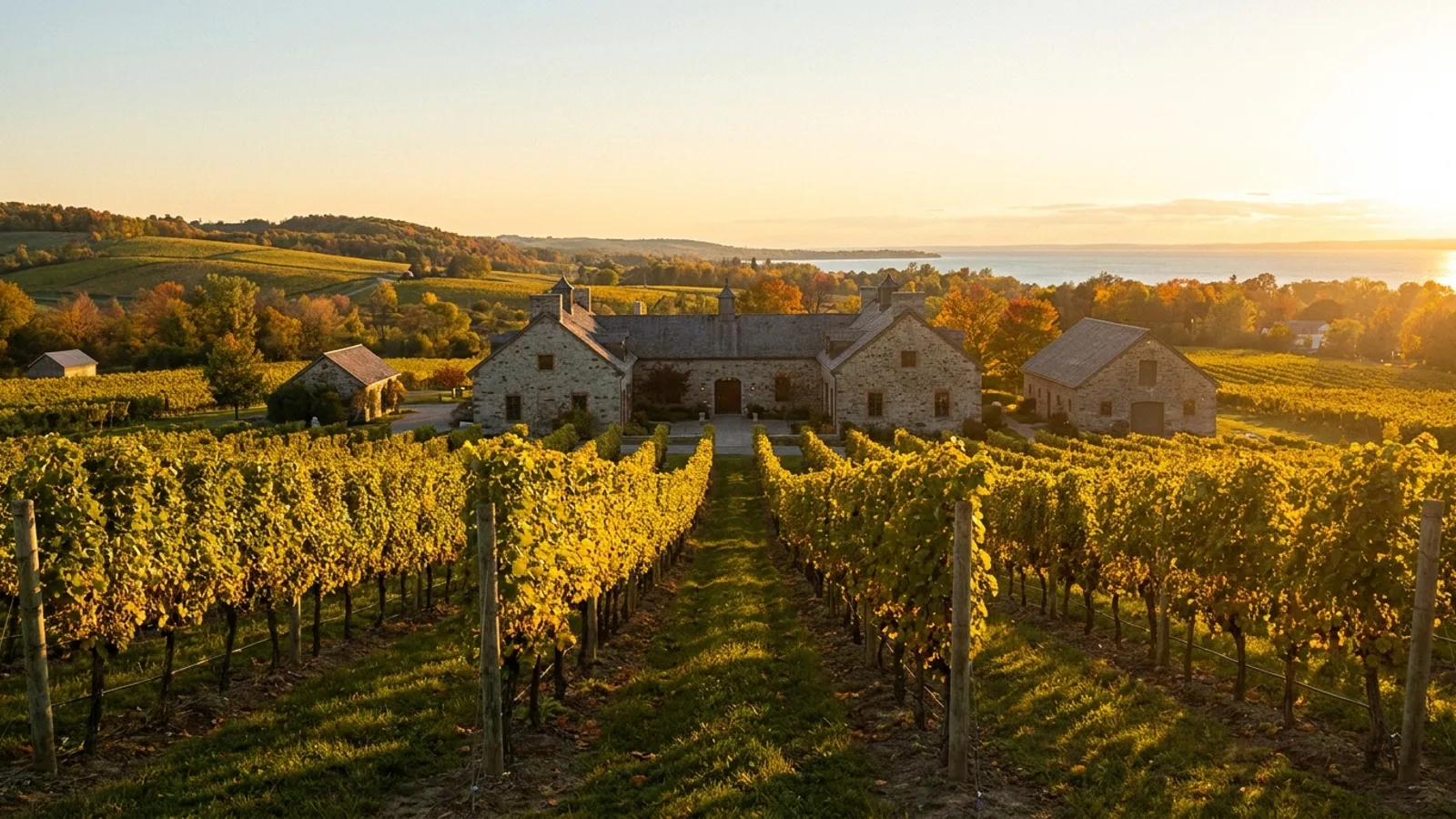
A winery tasting in February is a nice hour indoors. A winery tasting during harvest is a different thing entirely: the fruit is on the vine or in the crush pad, the place smells of it, and the people pouring your glass have been up since five. If you are going to visit Niagara wine country once, go between September and late October.
When harvest actually happens
- Early–mid September: the first whites come in. Vineyards at their fullest and greenest.
- Late September–mid October: the busiest stretch. Reds picking, crush pads running, and fall colour arriving in the vine rows.
- Late October: winding down, vines turning yellow and rust. Quieter and very photogenic.
- January: icewine harvest, picked frozen at around minus eight Celsius, usually at night.
Exact dates move with the season. A warm summer pulls picking earlier; a cool wet one pushes it back. Nobody publishes a harvest calendar in advance because the grapes decide.
Why Niagara grows wine at all
It is further north than most serious wine regions, and it works because of the water. Lake Ontario moderates the temperature and the Niagara Escarpment traps the moderated air over the peninsula, creating a pocket that stays warm enough late into the autumn to ripen fruit that should not ripen at this latitude.
That same geography is why icewine works here better than almost anywhere. You need reliable, hard, sustained cold, arriving after a long enough autumn for the fruit to have ripened first. Niagara gets both, and it built a global category on the combination.
Want Niagara handled for you, no planning, no driving?
Private SUV tour from Toronto: GTA hotel & Airbnb pickup, licensed guide, your schedule. $650 flat for up to 5 (about $130 each).
Prefer the details first? See the full private Niagara Falls tour from Toronto.
What to expect from a harvest visit
Two things are different from a summer tasting. First, the estates are working. You will see tractors in the rows, bins moving, and crush equipment running, and several wineries build tours around exactly that. Second, the people are more interesting to talk to, because what is in the glass connects directly to what is happening thirty metres away.
The trade-off is that harvest is also the busiest season for the staff. Weekend tastings at the well-known estates book out, and a walk-in on a Saturday in early October is optimistic. Midweek is easier and calmer, and if you can go on a Tuesday you will get a better visit than the same money buys on a Saturday.
How many wineries in one day?
Two, or three at the absolute most, if the falls are also on your itinerary. One if they are not the point of the trip.
The common mistake is booking four and enjoying none of them, because the day becomes a schedule. Estates are a few minutes apart along the wine route, so the driving is trivial, but each proper tasting is 45 minutes to an hour and the pleasure of the thing collapses if you are watching a clock.
Our NOTL winery guide covers which producers are worth the stop and what each is known for.
The obvious practical point
Someone has to drive, and Ontario has no tolerance for wine-country arithmetic about how much is fine. The wine route is rural road with no realistic taxi coverage and no transit worth the name.
This is the honest reason wine country is the part of a Niagara day most people hand to a driver. On our tours the winery stop is built into the route from Toronto, and nobody in the group has to be the designated driver or count anything. Our winery tour from Toronto covers how that day runs.
Combining harvest with the falls
They are twenty minutes apart, and the day almost plans itself. Falls in the morning while the promenade is quiet, drive the Parkway up to Niagara-on-the-Lake for early afternoon, one or two estates, then back down to the falls for the evening illumination.
The bonus in October is that the drive between them is the fall colour route, so the connecting leg stops being transit and becomes part of the day. See our fall colours guide for when the Parkway peaks.
FAQ
When is the wine harvest in Niagara-on-the-Lake?
The main harvest runs from about early September through late October, with the exact timing set by the growing season each year. Whites generally come in first, reds later, and icewine grapes are left on the vine until deep winter, usually January, when temperatures drop low enough to press them frozen.
Is it a good time to visit Niagara wineries during harvest?
It is the best time. The vineyards are in full fruit, the wineries are actively working, and many run harvest-season events and tastings. It is also the point in the year when staff are most willing to talk about what is actually happening in the cellar, because it is happening while you stand there.
Do you need to book Niagara winery tastings in advance?
On autumn weekends, yes. Harvest coincides with fall colour season and Thanksgiving weekend, and the better-known estates fill their tasting slots. Midweek you can usually walk in. Booking ahead costs nothing and removes the risk of driving out and being turned away.
What is Niagara wine country known for?
Icewine above all, which the region pioneered commercially and still leads globally. Beyond that, cool-climate whites such as Riesling and Chardonnay, and increasingly serious Pinot Noir and Cabernet Franc. The lake-moderated climate on the Niagara Peninsula is what makes the range possible.
Can you visit wineries and Niagara Falls in the same day?
Comfortably. Niagara-on-the-Lake is about 20 minutes from the falls along the Parkway, and the two make a natural single day: falls in the morning, wine country in the afternoon while the promenade is at its most crowded, then back for the evening illumination.
Related reading: Best NOTL Wineries · Things to Do in NOTL · Niagara Falls in September
Nobody Has to Be the Designated Driver
Private tour from Toronto with the falls and wine country in one day. $650 CAD flat for the vehicle, up to 5 people.